Play Challenge FreeCell
FreeCell with one or two cells - empty columns become your only lifeline.Getting to know Challenge FreeCell
In a nutshell: FreeCell with one or two cells - empty columns become your only lifeline. You play with 1 deck (52 cards), it's rated brutal, and far lower - a real skill test.
Challenge FreeCell keeps the classic layout and strips away your safety net. The deck deals face up into eight columns and you build downward in alternating colors toward four foundations by suit from Ace to King - all completely standard. The twist is the number of free cells: Two Cells mode gives you just two, and One Cell mode leaves you a single solitary spot. Since your supermove size depends directly on how many cells you have, cutting them slashes how many cards you can move at once, sometimes down to a single card. That makes empty columns absolutely everything - often the only way to shift a run at all. Any card can still fill an empty column, so clearing and guarding those spaces becomes the whole game. Many deals that are trivial in normal FreeCell turn genuinely hard, and some become unwinnable. This is the mode for players hunting a serious test.
Challenge by the numbers
| Goal | You still aim to build all four foundations up by suit from Ace to King, but with only one or two cells the climb is far steeper. Every move must count, because you have almost no spare room to fix a mistake. |
|---|---|
| Decks used | 1 standard 52-card deck - 52 cards in play |
| Difficulty | Brutal |
| Chance of winning | Far lower - a real skill test |
| Play modes | Two Cells, One Cell |
| Family | Challenge |
How a game of Challenge plays out
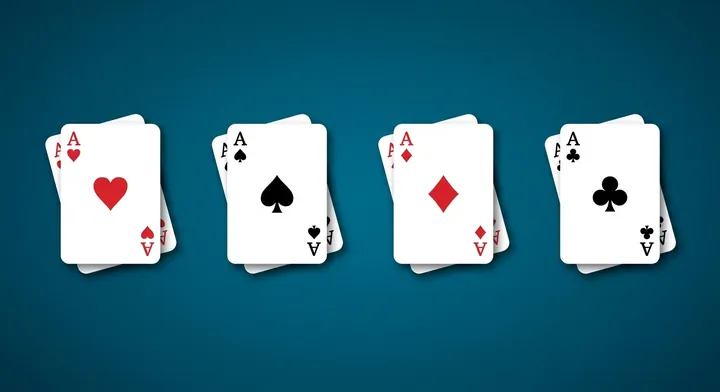
The uphill goal
You still aim to build all four foundations up by suit from Ace to King, but with only one or two cells the climb is far steeper. Every move must count, because you have almost no spare room to fix a mistake.
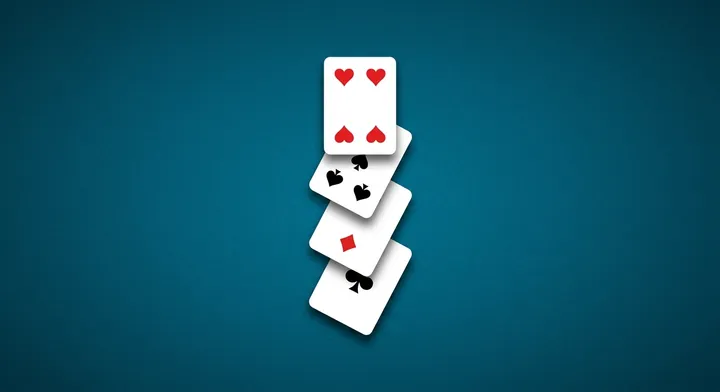
Eight tight columns
The familiar eight columns are dealt face up, and you build downward in alternating colors as always. Nothing about the tableau rule changes - what changes is that you have to navigate it with a fraction of the usual maneuvering room.
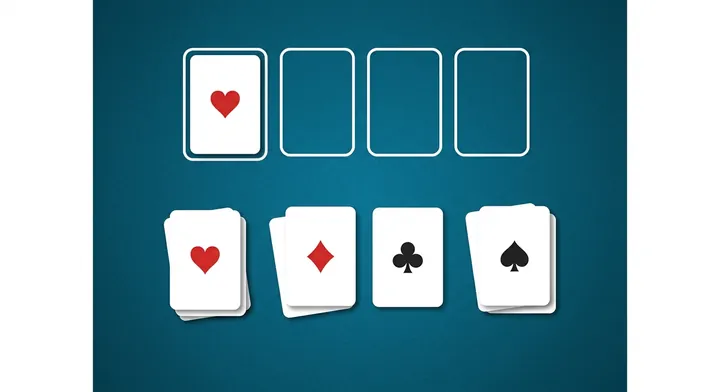
Just two free cells
In Two Cells mode you get two free cells; in One Cell mode, just one. That small number is the whole point: with so little parking, you cannot lift many blockers at once, and every cell you use must be earned back quickly.
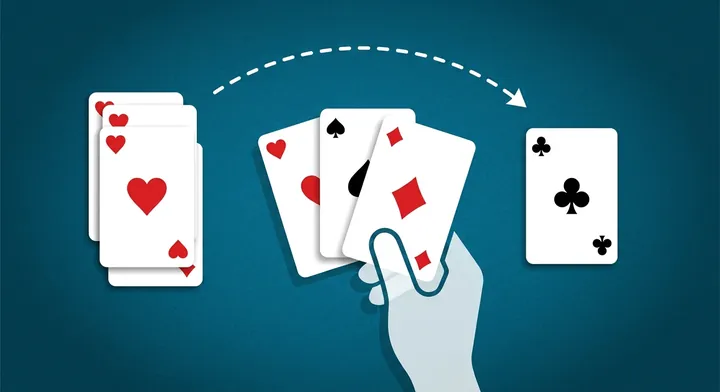
Squeezing a short run
Supermove size is (free cells + 1), doubled per empty column, so with one cell you can move only two cards - or one with none free. Empty columns become the main way to move any real sequence, which makes them the key to the whole game.
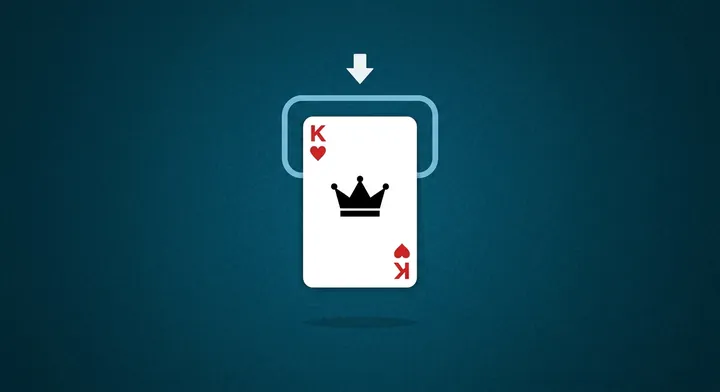
Guard every empty column
Any card may fill an empty column, and here those spaces are your lifeline. With cells so scarce, an empty column is often the only way to relocate a run, so open one as early as you can and never waste it carelessly.
Where Challenge comes from
Challenge FreeCell grows out of a simple question that experienced players kept asking: what if FreeCell had fewer cells? The four free cells are the game's great luxury, the reason nearly every deal can be solved, so trimming them is the most direct way to crank up the difficulty. Reduced-cell play has long circulated among enthusiasts as a way to keep the game fresh once ordinary deals stop putting up a fight.
The insight behind the mode is that a cell and an empty column are not equal. Cells give you a little parking, but empty columns multiply how many cards you can move, and they can hold any card. When cells are cut to one or two, that difference becomes stark - empty columns turn into the beating heart of the game, and the whole strategy reorganizes around opening and defending them.
Offered as Two Cells and One Cell modes, Challenge FreeCell has become the natural destination for players who have mastered the classic and crave a steeper climb. It keeps the beloved layout and rules intact while stripping away the comfort, producing deals that range from testing to outright brutal. For anyone who finds standard FreeCell too kind, this is where the family shows its teeth.
Winning at Challenge
💡 Top tip: Treat empty columns as the center of your whole plan - with only one or two cells, they are usually the sole way to move a run, so opening and protecting a column matters more than anything else you do.
Tips that move the needle
- Free your Aces and low cards as early as possible. With almost no spare parking, you cannot afford to leave blockers sitting on top of the cards you most need to release.
- Spend each free cell as if it were your last, because it nearly is. In One Cell mode a single misused cell can end the game, so always know how a parked card will return to play.
- Look several moves deep before committing. Challenge FreeCell punishes any move that buries a needed card, since you rarely have the resources to dig it out again.
- Prefer clearing a short column to filling your cell. An empty column is worth far more than a parked card here, so aim your early moves at opening space rather than hoarding it in a cell.
- Keep alternating-color runs as tidy as you can so that when you do open a column, you can move a meaningful group through it instead of a single card.
- Use undo relentlessly. Because many deals sit right on the edge of solvable, replaying from the point a column or cell was wasted is often the difference between a win and a loss.
Sharper play for Challenge
- Build your entire plan around a single empty column. With one or two cells, that column is your engine for every meaningful move, so identify the shortest column to clear and drive your opening toward emptying it.
- Convert cells into columns whenever you can. A parked card in your lone cell is nearly dead weight, so look for the line that trades that cell for a cleared column, which is worth far more in moving power.
- Sequence blockers with surgical care. Because you can only lift one or two cards at a time, plan the exact order to peel a column apart before you start, since there is no room to improvise midway.
- Free the deepest Aces first, even at some cost. A low card trapped near the bottom of a column is almost impossible to reach later with so few resources, so pay the price to release it while you still can.
- Keep your alternating runs pre-sorted so an opened column pays off instantly. If a tidy run is already waiting, one empty column lets you relay it as a group; a messy tableau squanders that hard-won space.
- In One Cell mode, treat every use of the single cell as a two-move commitment - park and retrieve - and never make the first half without a clear plan for the second.
- When a deal resists, suspect an early wasted column or cell rather than bad luck. Undo to that moment and try the line that opens space soonest, since in this mode the margin between winning and losing is razor thin.
Slip-ups to sidestep
- Playing loose with two cells - every cell you fill nearly halves what you can move, so treat them as gold.
- Emptying a column and refilling it at once - a gap is your real engine when the cells are this tight.
- Foundationing early just to feel progress - a card sent up too soon can freeze the board with so little spare space.
- Skipping the read - with one or two cells you must see the full solution before your first move or you will stall.
Cousins of Challenge
FreeCell
The full four-cell original, where the extra parking makes almost every deal winnable - the roomy baseline that Challenge mode deliberately strips down.
ForeCell
A different squeeze on the classic, filling the four cells at the start and reserving empty columns for Kings rather than cutting the cell count.
Baker's Game
Ups the difficulty through same-suit building instead of fewer cells, another way to make the familiar eight-column board far more demanding.
Seahaven Towers
A same-suit expert game that also starts you short on cells, pairing just two open cells with ten columns and Kings-only gaps.
Relaxed FreeCell
The polar opposite of Challenge mode, handing out free supermoves and any-card empty columns for the easiest possible ride.
Your Challenge questions answered
What makes Challenge FreeCell so hard?
Cutting the free cells to two or one dramatically shrinks how many cards you can move at once. That single change removes most of your maneuvering room, turning easy classic deals into serious puzzles and making some unwinnable.
What is the difference between the two modes?
Two Cells mode gives you two free cells; One Cell mode gives you only one. Fewer cells mean shorter supermoves and less room to fix mistakes, so One Cell is the harsher of the two challenges.
How many cards can I move at once?
The formula is (free cells + 1), doubled for each empty column. With one cell and no empty columns you can move just two cards; with one cell and an empty column, four. Empty columns are how you regain moving power.
Why are empty columns so important here?
Because cells are scarce, empty columns become your main tool for moving any run. Any card can fill one, and each one doubles your supermove size, so clearing and protecting columns is essentially the whole game.
Are all deals winnable in this mode?
No. With so few cells, some deals simply cannot be solved. The win rate is far lower than standard FreeCell, which is the point - this mode is meant to be a genuine test of skill, not a sure thing.
Is the layout the same as classic FreeCell?
Yes. Eight columns dealt face up, alternating-color building, and four foundations by suit from Ace to King. Only the number of free cells is reduced, so everything you know about FreeCell still applies - you just have less to work with.
Should I start with Two Cells or One Cell?
Two Cells mode is the friendlier starting point, since a second cell gives you noticeably more flexibility. Once you can win those regularly, One Cell mode offers the sterner test with just a single parking spot.
Can any card fill an empty column?
Yes. Challenge FreeCell keeps FreeCell's any-card rule for empty columns rather than restricting them to Kings. That freedom is essential, because empty columns are doing most of the heavy lifting in this mode.
What is the most common way to lose?
Filling your one or two cells with no way to empty them, or wasting an empty column on the wrong card. Both remove the little maneuvering room you have, and recovery is often impossible.
Does the winning goal change?
Not at all. You still move all 52 cards onto the four foundations, each built up by suit from Ace to King. The objective is identical to FreeCell; only the tools you use to reach it are cut down.
Is this a good way to sharpen my FreeCell skills?
Excellent, in fact. Playing with fewer cells forces you to value empty columns, plan deeper, and avoid waste - habits that make you much stronger when you return to standard FreeCell's roomier setup.
What should my very first move be?
Look for a way to start freeing an Ace or to begin clearing a short column, and avoid spending a cell unless you must. With so few cells, protecting your options in the opening is more important than in any other version.
Keep exploring FreeCell
- The full FreeCell rules hub - every variant, side by side.
- The FreeCell glossary - look up terms like free cell, supermove and brutal.
- The FreeCell FAQ - answers to the questions players ask most.
- Today's daily challenge - one shared deal, one shot, everyone's on the same board.
Ready to try something different? Compare Challenge with every other game in the FreeCell rules hub, or jump straight into the full list of FreeCell games.
Last updated .