Play Baker's Game Solitaire
FreeCell's stricter ancestor - build by suit and watch your landing spots vanish.Getting to know Baker's Game
In a nutshell: FreeCell's stricter ancestor - build by suit and watch your landing spots vanish. You play with 1 deck (52 cards), it's rated hard, and around 75% winnable with strong play.
Baker's Game is the game FreeCell grew from, and playing it shows you just how clever that one famous rule change really was. The setup is familiar: the whole deck deals face up into eight columns, four free cells wait above, and you build the four foundations up by suit from Ace to King. The difference lives in the tableau, where you build downward in the same suit rather than alternating colors. A six of spades will only accept a five of spades, which roughly halves the number of legal landing spots on any given move and makes the whole puzzle noticeably tighter. Any card may still fill an empty column, so spaces remain valuable escape hatches. The result is a demanding, satisfying game that rewards patient sequencing and long-range planning. If FreeCell feels solved to you, Baker's Game restores the difficulty the alternating-color rule quietly removed.
Baker's Game by the numbers
| Goal | You win by building all four foundations up by suit, Ace through King, until every card has left the tableau. The goal matches FreeCell exactly - it is the route there that is harder, because your tableau moves are more restricted. |
|---|---|
| Decks used | 1 standard 52-card deck - 52 cards in play |
| Difficulty | Hard |
| Chance of winning | Around 75% winnable with strong play |
| Family | Suit Builders |
How a game of Baker's Game plays out
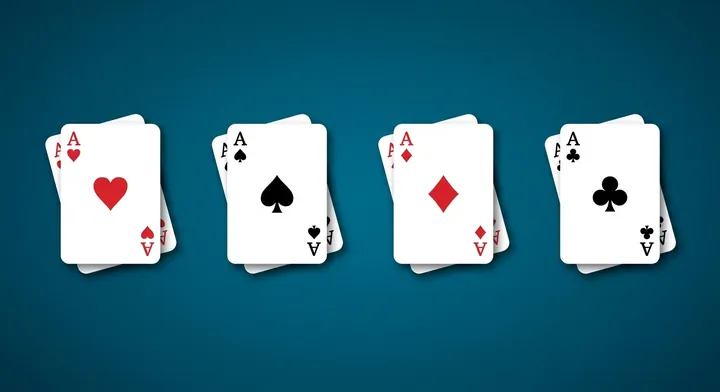
The target
You win by building all four foundations up by suit, Ace through King, until every card has left the tableau. The goal matches FreeCell exactly - it is the route there that is harder, because your tableau moves are more restricted.
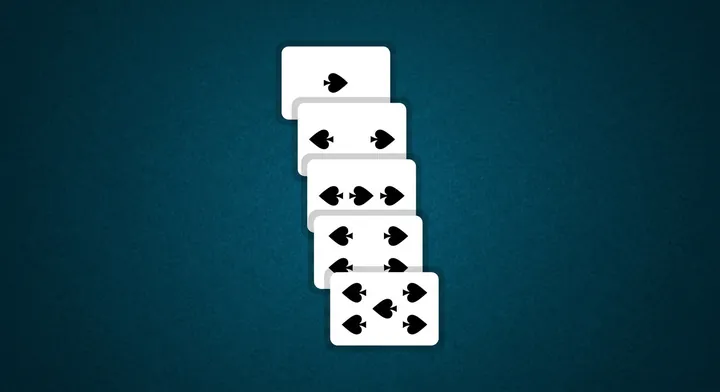
Building by suit
Inside the columns you build downward in the same suit, not alternating colors. That means a five of hearts can only sit on a six of hearts. This single rule cuts your available moves dramatically and is the heart of what makes Baker's Game tough.
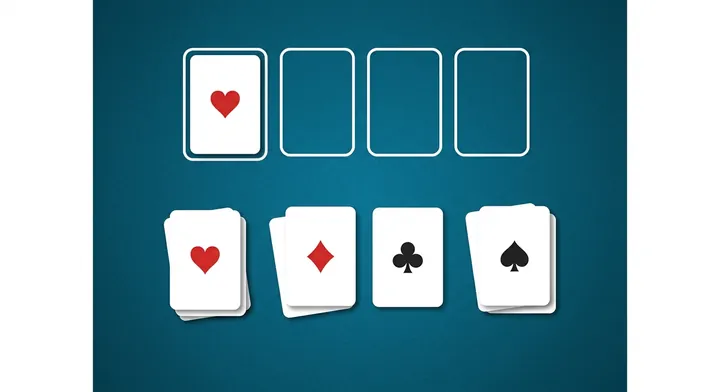
The four cells
Four free cells sit above the board, each holding one card as temporary storage. With fewer legal tableau moves available, these cells become even more precious than in FreeCell, so spend them carefully and reclaim them whenever you can.

Carrying a suited run
An ordered same-suit run can travel together as a supermove, sized by the usual (free cells + 1), doubled per empty column. But same-suit sequences are harder to assemble, so you will often move fewer cards at a time than you would in FreeCell.
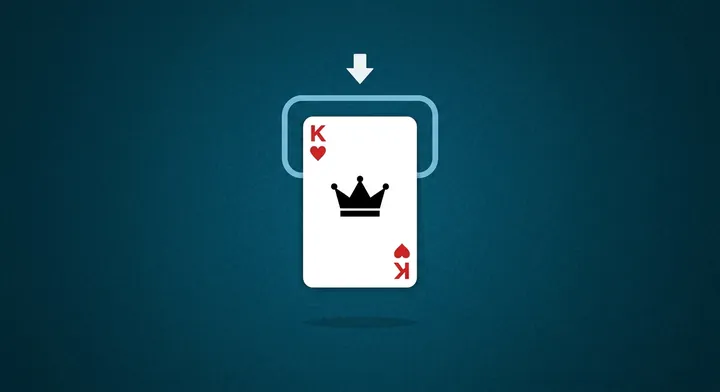
Filling a vacancy
When you clear a column, any card may be placed into the empty space. This flexibility is a lifeline in such a strict game, giving you somewhere to unload an awkward card and untangle a suit, so protect your empty columns and use them wisely.
Where Baker's Game comes from
Baker's Game is the elder statesman of the FreeCell family, a same-suit patience game that circulated among card players long before computers entered the picture. Its defining feature - building tableau sequences down in a single suit - made it a genuinely hard puzzle, the kind that could resist a player for a long time and reward disciplined thinking.
The game reached a wide audience when Martin Gardner, the legendary mathematics and puzzle columnist, described it in Scientific American in 1968. Gardner credited a man named C. L. Baker with teaching him the game, and that is how it earned its name. Through Gardner's column, Baker's Game found its way into the imaginations of countless readers who loved a good logical challenge.
The most important chapter in its story came a decade later. In 1978 Paul Alfille, building a computer version, decided to relax the same-suit rule into alternating colors. That single adjustment transformed the difficulty and gave birth to FreeCell. In that sense Baker's Game is not just a sibling of FreeCell but its direct parent, and playing it today is a chance to experience the puzzle exactly as it stood before one clever change made history.
Winning at Baker's Game
💡 Top tip: Because same-suit building gives you so few landing spots, plan several moves ahead before committing - the biggest cause of losses here is burying a card you needed with no matching-suit home to move it to.
Tips that move the needle
- Free your Aces early and keep the foundations climbing. In a game this tight, every card you get onto a foundation removes a blocker you would otherwise struggle to relocate.
- Guard your free cells jealously. With half the tableau moves of FreeCell, a cell you fill carelessly can strand you, so only park a card when you see how it will come back into play.
- Empty columns are your escape valves. Since any card can fill them, use a cleared column to hold an out-of-place card while you build a suited run underneath, then rebuild in order.
- Try to assemble long same-suit sequences when the chance appears. They let you move groups in a single supermove, which is a rare luxury in a game where suited runs are hard to form.
- Watch all four suits, not just the one you are working on. It is easy to tunnel on clearing one column and accidentally lock away the low card of another suit you needed next.
- Use undo to test lines. Baker's Game punishes a single greedy move harshly, so when you hit a wall, step back and look for the moment your suited options quietly ran out.
Sharper play for Baker's Game
- Think in suits, not just columns. Before moving anything, trace where each suit's low cards are trapped, because in Baker's Game a card only ever lands on its own suit and misplaced piles are brutal to undo.
- Prize empty columns above free cells for untangling. Since any card fills a cleared column, use that space to peel off out-of-suit cards one by one, exposing the suited run you are trying to assemble underneath.
- Build foundations evenly so no single suit gets marooned. Racing hearts to the seven while the two of spades stays buried can leave you unable to progress the other suits when you need to.
- Assemble suited runs on the tableau whenever a chance appears, even if it is not immediately useful. A ready-made same-suit sequence is a rare asset that lets you move a group instead of shuffling single cards.
- Count your real supermove capacity before you start a group move. Suited runs are precious, and beginning a move you cannot finish can scatter a sequence you spent several turns building.
- Keep one cell as an emergency valve for the endgame. In the final push, having a single open cell to reposition a stubborn card of the wrong suit is often the difference between a win and a lock.
- When a deal stalls, replay from the point where a suit first got blocked. The losing move in Baker's Game is usually the one that stacked a foreign suit onto a card you later needed to free.
Slip-ups to sidestep
- Playing it like FreeCell - builds must follow suit here, so a red 7 only takes the 6 of its own suit, not any black 6.
- Stacking a low card on a higher card of the same suit - in a same-suit game that becomes a permanent block.
- Filling every cell - same-suit landing spots are scarce, so guard your cells even more than in FreeCell.
- Chasing foundations too fast - you rarely get a card back once it leaves, so keep useful ranks in play.
Cousins of Baker's Game
FreeCell
The direct descendant, identical in layout but building down in alternating colors, a change that makes almost every deal winnable instead of merely most.
Eight Off
The closest same-suit relative, sharing the build-by-suit rule but offering eight free cells and Kings-only empty columns for a gentler experience.
Seahaven Towers
Another same-suit game, spread over ten columns with only two open cells to start and Kings required for empty columns, raising the planning demands.
ForeCell
An alternating-color cousin that tightens the opening instead of the building rule, with full cells at the deal and Kings-only empty columns.
Relaxed FreeCell
The forgiving opposite of Baker's Game, using alternating colors plus free supermoves and any-card empty columns for an easy, low-stress session.
Your Baker's Game questions answered
How is Baker's Game different from FreeCell?
The tableau builds down in the same suit instead of alternating colors. Everything else - eight columns, four cells, foundations by suit, any card into empty columns - is the same. That one change makes it considerably harder.
Why is same-suit building so much harder?
Building by suit roughly halves your legal landing spots. A card can only go on the next-higher card of its own suit, so you have far fewer places to unload blockers and much less room to maneuver.
Who was Baker's Game named after?
It is named after a man called C. L. Baker, who is credited with introducing the game to the wider patience-playing world. The name has stuck ever since, honoring the person who popularized this same-suit challenge.
How did Baker's Game lead to FreeCell?
Paul Alfille based FreeCell on Baker's Game but changed the tableau rule from same-suit to alternating colors. That switch opened up so many extra moves that nearly every deal became solvable, effectively creating FreeCell.
What percentage of deals can be won?
With strong play, around three-quarters of Baker's Game deals are winnable. That is well below FreeCell's near-certainty, reflecting how much the same-suit rule tightens your options.
Can any card go into an empty column?
Yes. Unlike ForeCell or the same-suit game Eight Off, Baker's Game lets any card fill a cleared column. That freedom is an important relief valve in an otherwise very strict game.
Did Martin Gardner write about this game?
Yes. The mathematics writer Martin Gardner described Baker's Game in one of his Scientific American columns in 1968, which helped bring the game to a broad audience of puzzle enthusiasts.
How many cards can I move at once?
The supermove formula is the standard (free cells + 1), doubled for each empty column. In practice you often move fewer cards than in FreeCell because same-suit runs are harder to build in the first place.
Is Baker's Game a good challenge for FreeCell fans?
It is ideal. The board looks identical, so there is no new layout to learn, but the same-suit rule forces you to think far more carefully. Many FreeCell veterans enjoy it precisely because it is tougher.
Should I clear columns aggressively?
Clearing a column is valuable because any card can then fill it, but do not empty one recklessly. Make sure the space will actually help you sort a suit, or you may spend effort for little gain.
Do the foundations differ from FreeCell?
No. Each foundation is a single suit built up from Ace to King, just like FreeCell. The winning goal is identical; only the tableau building rule has changed to make the game harder.
What is the single biggest mistake to avoid?
Burying a low card under cards of other suits with no way to reach it again. Because you can only build by suit, an out-of-suit pile on top of a needed card can be extremely hard to clear.
Keep exploring FreeCell
- The full FreeCell rules hub - every variant, side by side.
- The FreeCell glossary - look up terms like free cell, supermove and hard.
- The FreeCell FAQ - answers to the questions players ask most.
- Today's daily challenge - one shared deal, one shot, everyone's on the same board.
Ready to try something different? Compare Baker's Game with every other game in the FreeCell rules hub, or jump straight into the full list of FreeCell games.
Last updated .