Play ForeCell Solitaire
FreeCell with the cells already full - so you have to earn your breathing room.Getting to know ForeCell
In a nutshell: FreeCell with the cells already full - so you have to earn your breathing room. You play with 1 deck (52 cards), it's rated tight and tactical, and about 75% winnable with careful play.
ForeCell keeps the open, everything-face-up spirit of FreeCell but removes your cushion. The deck lands in eight tableau columns of six cards each, and the four free cells above are not empty - each one already holds a card at the deal. That means you start with zero spare parking, so your very first move has to create space instead of spending it. As in FreeCell you build the tableau downward in alternating colors and send cards up to four foundations by suit from Ace to King. The sharpest twist is the empty-column rule: only a King may move into a cleared column, so gaps are harder to use and far more precious. All of this makes the opening notably tense, rewarding players who unload the free cells early and plan several moves deep before touching a single card.
ForeCell by the numbers
| Goal | Your target is the four foundations, one per suit, each stacked up in order from Ace to King. Clear all 52 cards onto them and you win. Because the cells start occupied, planning the route for those Aces and twos matters even more than in FreeCell. |
|---|---|
| Decks used | 1 standard 52-card deck - 52 cards in play |
| Difficulty | Tight and tactical |
| Chance of winning | About 75% winnable with careful play |
| Family | Classic FreeCell |
How a game of ForeCell plays out
What you're building
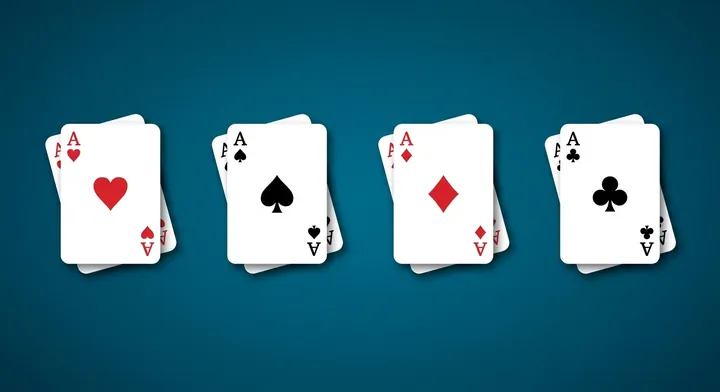
Your target is the four foundations, one per suit, each stacked up in order from Ace to King. Clear all 52 cards onto them and you win. Because the cells start occupied, planning the route for those Aces and twos matters even more than in FreeCell.

The tableau
Eight columns of six cards form the playing field, all dealt face up. You stack downward in alternating colors, so a black five sits under a red six. Seeing every card lets you plan, but the tighter setup means you must plan harder.
Cells that start full
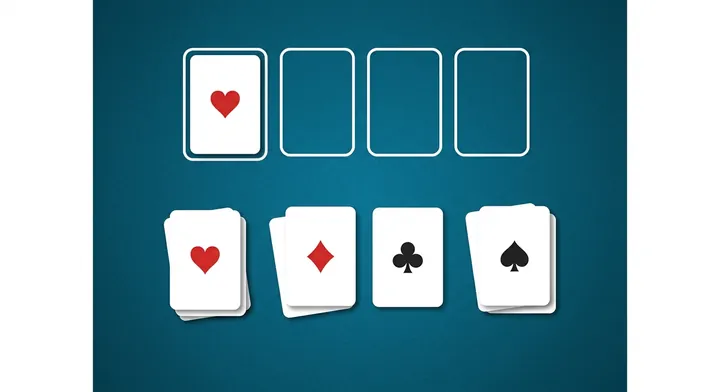
Each of the four free cells holds a card from the very first deal, so you begin with no open parking at all. Your earliest goal is usually to empty one or two cells by playing their cards onto the tableau or up to a foundation, buying yourself room to move.

Sliding a sequence
An ordered run of alternating colors can move as one supermove. The size still follows (free cells + 1), doubled per empty column, but since you start with no free cells, early supermoves are short. Free up cells first to lengthen the runs you can carry.

Kings only
When a column empties, only a King may be placed there - no other card qualifies. This makes empty columns scarcer and more strategic than in FreeCell, so plan to have a King ready before you clear a column, or the space may sit useless.
Where ForeCell comes from
ForeCell belongs to a cluster of open patience games that appeared as programmers began experimenting with the FreeCell formula on computers. Where FreeCell handed the player four empty cells and total freedom over empty columns, designers wondered what would happen if those luxuries were dialed back. ForeCell is one of the answers, keeping the beloved alternating-color tableau but stripping away the comfortable opening.
The name plays on FreeCell's own, and the design intent is right there in the rules. Filling the cells before the first move and restricting empty columns to Kings turns the gentle, almost meditative flow of FreeCell into something sharper and more deliberate. Every early decision carries weight because you have no slack to waste, which appeals to players who found standard FreeCell a touch too forgiving.
ForeCell has traveled widely through the digital patience collections that popularized dozens of FreeCell relatives. It rarely gets the spotlight that FreeCell enjoys, but among enthusiasts it holds a respected place as a tactical, honest test - close enough to feel like home, different enough to demand fresh thinking every hand.
Winning at ForeCell
💡 Top tip: Your top priority in the opening is to empty at least one free cell. Starting with all four full means you have no room to breathe, so find a tableau or foundation home for a parked card before anything else.
Tips that move the needle
- Hunt for Aces and low cards you can release quickly. Getting a foundation started frees the cards stacked above and slowly hands you the flexibility that FreeCell gives you for free.
- Because only Kings fill empty columns, line up a King before you commit to clearing a column. An empty space you cannot use is wasted effort in this variant.
- Move the cards from the starting cells onto natural tableau sequences whenever you can. Every card you return to the board is a cell you get back for real maneuvering.
- Think in terms of trades: giving up a free cell should always buy you a concrete gain, like uncovering an Ace or extending a run. Never dump a card into a cell without a plan to retrieve it.
- Keep your alternating-color runs long and orderly so that when you do free up cells, you can move meaningful groups instead of single cards.
- Undo is your friend in ForeCell. The tight start punishes greedy moves, so replay the opening and look for the line that opens a cell soonest.
Sharper play for ForeCell
- Map your cell-emptying plan before the first move. Identify which of the four starting cards has the easiest tableau home, and build your opening around freeing that cell so the rest of the game opens up.
- Since only Kings fill empty columns, treat your Kings as keys. Track where each King sits and time your column-clearing so a King is ready to claim the space the moment it appears.
- Prioritize releasing Aces even over tidy tableau building. In a game this tight, a started foundation is the fastest way to shed the pressure of having no spare cells.
- Avoid parking a card back into a cell unless retrieving it is part of a concrete two- or three-move sequence. Re-filling a hard-won cell without a plan often reintroduces the exact gridlock you just escaped.
- Because early supermoves are short, sequence your tableau so that single-card moves gradually assemble a longer run. Then, once a cell is free, you can relocate the whole group in one economical motion.
- Watch the color balance beneath your Kings. A cleared column headed by a King only helps if the next card you need is the opposite color, so set up the receiving run before you open the space.
- When a deal resists you, restart the opening rather than grinding. The difference between a winnable and lost ForeCell hand usually lives in the first half-dozen moves that decide how fast you regain your cells.
Slip-ups to sidestep
- Panicking because the cells start full - free one cell early by landing its card on the tableau before you plan anything big.
- Emptying a column with no King ready - only Kings fill a gap in ForeCell, so an open column without one just freezes space.
- Sending low cards up too fast - with tight cells you often still need those cards as landing pads.
- Ignoring colour parity - you build in alternating colours, so keep both a red and a black target alive.
Cousins of ForeCell
FreeCell
The parent game, with all four cells empty at the deal and any card allowed into an empty column, making it far more forgiving than ForeCell's tense opening.
Baker's Game
Another strict relative that builds down in the same suit rather than alternating colors, trading ForeCell's cell restriction for a harsher building rule.
Eight Off
A roomier same-suit game with eight cells, six of them filled at the start, and the same Kings-only rule for empty columns that ForeCell uses.
Seahaven Towers
A demanding same-suit game that also restricts empty columns to Kings, but spreads the cards across ten towers with just two open cells to start.
Challenge FreeCell
A different way to raise the difficulty, cutting the free cells to two or one while keeping any-card empty columns, contrasting with ForeCell's full-cells approach.
Your ForeCell questions answered
How is ForeCell different from FreeCell?
Two changes: the four free cells begin the game already filled, and only a King may enter an empty column. Everything else - alternating-color building and foundations by suit - matches standard FreeCell, but the reduced early freedom makes it harder.
Why do the cells start with cards in them?
That is the defining rule of ForeCell. Four cards are dealt into the cells at the start, leaving you no spare parking. It forces you to create room through smart play rather than relying on empty cells from move one.
Can I put any card in an empty column?
No. Only a King may move into a cleared column in ForeCell. This is one of the biggest differences from FreeCell, where any card is allowed, and it makes empty columns much harder to exploit.
What percentage of ForeCell games are winnable?
Roughly three in four deals can be won with careful play, notably lower than FreeCell's near-certainty. The full starting cells and Kings-only rule mean some deals simply cannot be untangled.
What should my first move be?
Look for a card in a free cell that fits onto a tableau column, or an Ace you can send up. Emptying a cell early is usually the strongest opening because it restores your ability to maneuver.
How many cards can I move at once?
The same formula applies: (free cells + 1), doubled for each empty column. Since you begin with no free cells, early moves are limited to single cards until you clear some parking or open a column.
Is ForeCell older than FreeCell?
ForeCell is a close relative rather than a strict ancestor. It shares FreeCell's alternating-color building but adds the filled cells and Kings-only rule, producing a tighter, more tactical challenge on the same familiar board.
Do foundations work the same way?
Yes. Each of the four foundations is built up by suit from Ace to King, exactly as in FreeCell. The goal of clearing all 52 cards onto them is unchanged; only the tools you start with are stricter.
Why does it feel so cramped at the start?
With every free cell taken and empty columns reserved for Kings, you have very little slack in the opening. That cramped feeling is by design and eases as you play cards up and free your cells.
Should I rush cards to the foundations?
Be cautious. As in FreeCell, a low card left in play can serve as a landing spot. But because ForeCell is tighter, freeing a cell sometimes outweighs holding a card back - weigh each case on its own.
Can I get stuck with no moves?
Yes, more easily than in FreeCell. If your cells stay full and no tableau or foundation move is available, the game is blocked. Plan ahead and keep an eye on which cell you can empty next.
Is ForeCell a good next step after FreeCell?
It is a natural progression. The board looks familiar, so the learning curve is mostly about the tighter opening and the Kings-only columns. Master those two rules and your FreeCell instincts carry over well.
Keep exploring FreeCell
- The full FreeCell rules hub - every variant, side by side.
- The FreeCell glossary - look up terms like free cell, supermove and tight and tactical.
- The FreeCell FAQ - answers to the questions players ask most.
- Today's daily challenge - one shared deal, one shot, everyone's on the same board.
Ready to try something different? Compare ForeCell with every other game in the FreeCell rules hub, or jump straight into the full list of FreeCell games.
Last updated .