Play Classic FreeCell Solitaire
Classic FreeCell and its whole family, plus the thing most FreeCell sites lack: race a friend live in real-time multiplayer. No download, no signup.FreeCell.now is a free online home for FreeCell - the pure-skill patience game where every card is dealt face up and four free cells give you room to think. Here you get classic FreeCell plus its whole family: Eight Off, Baker's Game, Seahaven Towers, ForeCell, Double FreeCell and more.
Because nearly every FreeCell deal can be solved, a loss is almost always a puzzle you can crack rather than bad luck - which makes it one of the most rewarding card games to master. There is nothing to download and no account required: line up your free cells and start playing straight away, or take on a shared daily challenge and race a friend on the identical deal.
Other games worth playing
A whole shelf of browser puzzles for when you want a change of shape.
Play free puzzle games →Getting to know FreeCell
In a nutshell: Every card is face up - so almost every deal can be won with a clear plan. You play with 1 deck (52 cards), it's rated pure skill, and 99.999% of deals are winnable.
FreeCell is the open, thinking-person's game of the patience family. The full 52-card deck is dealt face up into eight columns - the first four columns hold seven cards, the last four hold six - so nothing is hidden and nothing is left to luck once the cards are down. Above the board sit four free cells, each a parking spot for a single card, and four foundations that you build up by suit from Ace to King. On the tableau you stack cards downward in alternating colors, red on black and black on red. Because you can see everything, the game rewards planning over guessing: work out where each buried card needs to go before you commit. Nearly every deal you meet has a solution waiting to be found, which is exactly why FreeCell hooks people for years.
FreeCell by the numbers
| Goal | You win by moving all 52 cards up to the four foundation piles. Each foundation is a single suit, and you fill it in order from the Ace at the bottom to the King on top. When every suit reaches its King, the game is solved and the board is clear. |
|---|---|
| Decks used | 1 standard 52-card deck - 52 cards in play |
| Difficulty | Pure skill |
| Chance of winning | 99.999% of deals are winnable |
| Family | Classic FreeCell |
How a game of FreeCell plays out
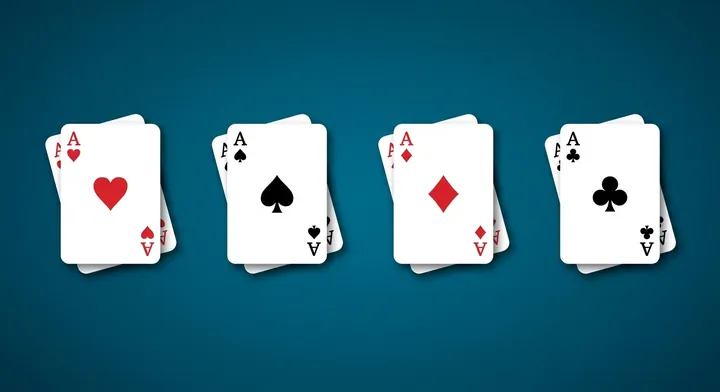
The goal
You win by moving all 52 cards up to the four foundation piles. Each foundation is a single suit, and you fill it in order from the Ace at the bottom to the King on top. When every suit reaches its King, the game is solved and the board is clear.

Eight columns
The deck is dealt into eight tableau columns, seven cards in the first four and six in the rest. Inside a column you build downward in alternating colors, so a red six can land on a black seven. Every card faces up, which means you always know precisely what you are working with from the very first move.
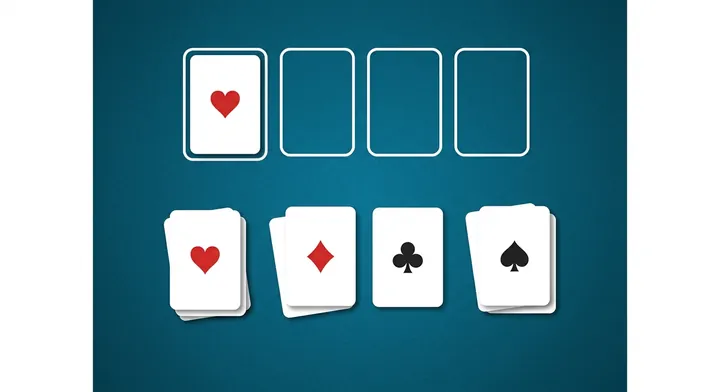
Four free cells
The four free cells at the top are your temporary holding spots. Each cell holds exactly one card of any kind, letting you lift a blocker out of the way to reach what is beneath it. A card in a cell can return to the tableau or jump to a foundation whenever it fits, so treat cells as a loan, not a dumping ground.
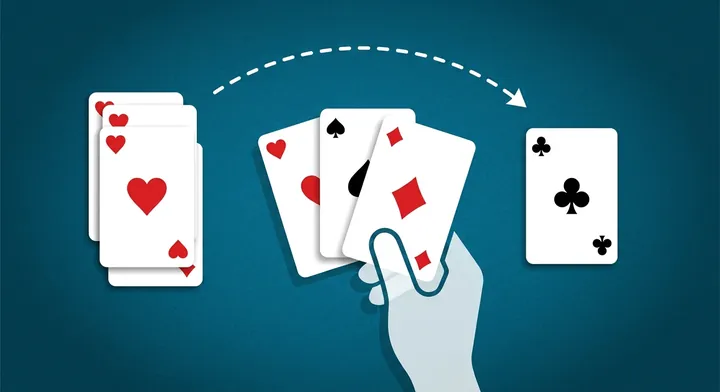
Moving several cards
You may only truly move one card at a time, but an ordered run can travel together as a supermove. The number you can shift equals (free cells + 1), doubled for each empty column, so with two open cells and one empty column you can relocate six cards at once. Fewer free resources means shorter runs, so guard them carefully.
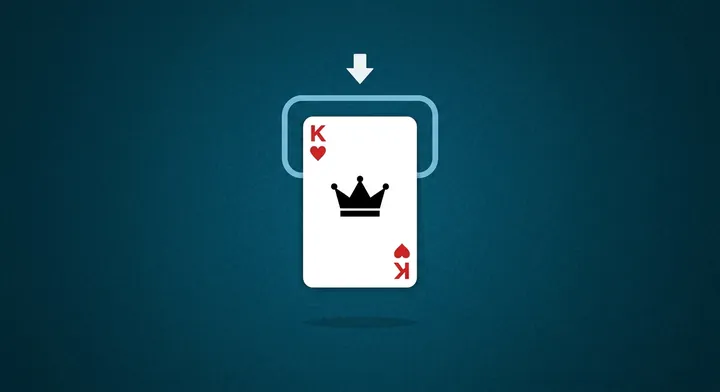
Empty columns
When you clear a column completely, that empty space becomes hugely valuable. In FreeCell any single card may be placed into an empty column, giving you a flexible staging area. Empty columns also boost your supermove size, so opening one - and not wasting it - is often the turning point of a hard deal.
Where FreeCell comes from
FreeCell grew out of an older game called Baker's Game, in which cards were built down by suit. In 1978 a medical student named Paul Alfille reprogrammed the game for the PLATO educational computer system at the University of Illinois. His key change was to let players build in alternating colors instead of a single suit, which opened up so many more moves that nearly every deal became solvable. That one tweak turned a stubborn puzzle into a game of near-pure skill.
For years FreeCell lived quietly on PLATO terminals and in early shareware. Everything changed when Microsoft bundled a version, written by Jim Horne, with Windows. It shipped as a free extra and then reached a vast audience with Windows 95, complete with 32,000 numbered deals that players could compare and challenge each other on. Millions of people who had never seen a computer game discovered FreeCell during coffee breaks.
That Microsoft edition sparked a famous community effort to prove which numbered deals were solvable. Volunteers eventually cleared all but one, deal #11982, cementing FreeCell's reputation as the patience game where thinking almost always beats the shuffle. Today it stands as the purest test in the whole family, the game people reach for when they want to win by wits alone.
Winning at FreeCell
💡 Top tip: Before you touch a card, plan how to free the Aces and twos - they are the foundation of everything and the sooner they climb, the more room you unlock across the whole board.
Tips that move the needle
- Keep at least one free cell open for as long as you can. Cells that are all full leave you with no way to maneuver, and many losses come from filling every cell too early.
- Empty columns are worth more than free cells because they multiply your moving power. Aim to clear a short column and then protect that empty space rather than filling it on the first temptation.
- Do not rush every low card to the foundations. A two or three left in the tableau can be a useful landing spot for a higher card of the opposite color, so send cards up only when it truly helps.
- Work on the most cluttered column early. Digging out a deeply buried card gets much harder once your cells and spaces are committed elsewhere.
- Build long alternating-color runs so you can shuffle groups of cards in single supermoves. Tidy sequences make the endgame flow instead of grinding one card at a time.
- If you get stuck, use undo and look for the move you regret. FreeCell is solvable by thought, so a dead end usually means one earlier choice wasted a cell or a column you needed.
Sharper play for FreeCell
- Read the whole board as a network of dependencies before move one. Trace which card blocks which Ace, and which column you must empty to free the chain, so every early move serves a plan rather than a whim.
- Treat empty columns as reusable engines, not one-time gifts. Move a run in through the empty column, then reclaim the space by shifting the run onto a natural landing spot, keeping the multiplier alive for later.
- Balance your suits on the foundations. Racing one suit far ahead can strand the low cards of another color that you needed as tableau anchors, so advance the four suits at a roughly even pace.
- Sequence supermoves in your head and count resources first. If a move needs five cards of capacity and you only have four, find the extra cell or space before you start, not halfway through.
- Hold a King back near an empty column when you can. Kings cannot stack on anything, so parking one where it can head an empty space keeps your longest runs organized and mobile.
- In the endgame, delay auto-moving low cards you might still need as landing spots. A three of clubs left in play can rescue a four of hearts that would otherwise have nowhere to go.
- When a deal feels impossible, look for a second path to the same buried card. Open FreeCell usually offers more than one route, and the losing line is often just the greedier of two options.
Slip-ups to sidestep
- Filling all four free cells early - it strangles your mobility, so keep at least one cell open to shuffle a run.
- Rushing mid cards to the foundations - a 5 sent up too soon can strand a black 4 that still needed it in the tableau.
- Refilling an empty column right away - an empty column multiplies how many cards you can move, so keep it as work space.
- Moving before you read the whole board - every card is face up, so trace the full unbury line before you touch a cell.
Cousins of FreeCell
ForeCell
A tighter cousin where the four free cells start already filled and only Kings may enter an empty column, so your opening breathing room is far smaller.
Baker's Game
FreeCell's ancestor, played with the same layout but building down in the same suit instead of alternating colors, which cuts your landing spots roughly in half.
Eight Off
A gentler same-suit relative with eight free cells - six filled at the deal - and Kings-only empty columns, giving you more room to recover from mistakes.
Double FreeCell
The two-deck marathon, with ten columns, six cells and eight foundations, offering the same alternating-color logic on a much bigger canvas.
Challenge FreeCell
The classic layout squeezed down to two or even one free cell, turning empty columns into your lifeline and pushing the difficulty far higher.
Your FreeCell questions answered
Is every FreeCell deal winnable?
Almost. The odds a random deal has no solution are tiny, well under one in ten thousand. Of the 32,000 numbered Microsoft deals, only one - deal #11982 - has been proven unsolvable, which is why we say 99.999% of deals can be won.
How many cards can I move at once?
You physically move one card, but a valid run travels as a group. The count is (free cells + 1) multiplied by two for every empty column. So four open cells and no empty columns lets you move five cards in sequence.
What order do the foundations go in?
Foundations build up by suit starting with the Ace. After the Ace comes the two, then the three, and so on all the way to the King. Each of the four foundations holds one suit only.
Can I put any card into an empty column?
Yes. In standard FreeCell an empty column accepts any single card or any run you have the resources to move. This freedom is what makes empty columns so powerful compared to stricter variants like ForeCell.
Should I always send cards to the foundations?
No. Moving a card up is permanent, and a low card left in play can catch a higher card of the other color. A good habit is to advance a card only when you are sure it will not be needed as a landing spot.
What makes FreeCell different from Klondike?
In Klondike many cards are hidden and you draw from a stock, so luck plays a big role. FreeCell deals everything face up with no stock, so the outcome depends almost entirely on the choices you make.
Why do I keep losing if deals are winnable?
A winnable deal only stays winnable if you play the right line. Filling all four cells, burning an empty column too soon, or rushing cards up can lock you out. Undo freely and rethink the order of your moves.
What is the best opening move?
There is rarely one perfect first move. Scan for Aces and twos you can free, look at your most crowded column, and avoid spending a free cell until you have a clear reason. Plan two or three moves ahead before committing.
Does the timer or move count affect winning?
No. You win by clearing every card to the foundations regardless of how long it takes. Time and move count only matter for scoring and leaderboards, so beginners can take all the thinking time they need.
Can a game become truly stuck?
Yes, if every cell is full and no legal tableau or foundation move remains, you are blocked. Because FreeCell is an open game, that almost always traces back to an avoidable earlier mistake rather than bad luck.
Is auto-move safe to use?
Auto-move sends cards to the foundations when they can no longer be useful in the tableau. It saves clicks and is safe in most positions, but in tight endgames you may want to move manually so you keep a low card as a landing spot.
How long does a typical game take?
Most players finish a single-deck FreeCell in three to eight minutes once they know the ropes. Harder deals can take longer as you plan the order of moves, but the board is never so large that games drag on for very long.
Keep exploring FreeCell
- The full FreeCell rules hub - every variant, side by side.
- The FreeCell glossary - look up terms like free cell, supermove and pure skill.
- The FreeCell FAQ - answers to the questions players ask most.
- Today's daily challenge - one shared deal, one shot, everyone's on the same board.
Ready to try something different? Compare FreeCell with every other game in the FreeCell rules hub, or jump straight into the full list of FreeCell games.
Last updated .
More FreeCell games to play
Why play FreeCell here?
FreeCell.now is built for people who actually play: instant deals, smooth drag-and-drop, unlimited undo, smart hints, one-tap auto-finish, and per-game statistics saved in your browser. Every member of the FreeCell family is here - Eight Off, Baker's Game, Seahaven Towers, Challenge FreeCell and more - plus something almost no FreeCell site has: real online multiplayer, where you and a friend race the exact same deal on different devices. Browse the full list of free FreeCell games, or read the FreeCell FAQ if you are new to the game.
Want to sharpen up first? The rules hub lays out every variant side by side, and the FreeCell glossary explains every term from free cell to supermove.
Good to know before you play
Is FreeCell.now free?
Yes. Every FreeCell game, every variant, the daily challenge, the leaderboard and live multiplayer are free to play in your browser - no download and no signup. An optional Google sign-in only adds a permanent name that follows you across devices.
Do I need to download or install anything?
No. FreeCell.now runs entirely in your web browser on desktop, tablet and phone. You can add it to your home screen so it opens like an app, but there is nothing to install and nothing to update.
Is FreeCell.now safe to use?
Yes. The site uses HTTPS and lets you play everything as a guest, with your wins and best times saved in your own browser rather than on a server. The only account option is Google sign-in, and it is completely optional.
What makes FreeCell.now different from other FreeCell sites?
Two things set it apart. It gathers every FreeCell variant - FreeCell, ForeCell, Relaxed FreeCell, Baker's Game, Eight Off, Seahaven Towers, Double FreeCell and Challenge FreeCell - in one place, and it adds real-time head-to-head multiplayer where you and a rival race the identical deal live. Almost no other FreeCell site offers both.
Who made FreeCell.now?
FreeCell.now is an independent, ad-light free FreeCell site built for people who actually enjoy the game. You can learn more on the About page and reach the team through the contact form.
The FreeCell family explained
FreeCell is not a single game - it is a small family of open, skill-first card games, all built on the same clever idea. The whole deck is dealt face up, a few free cells give you room to maneuver, and you build the foundations up by suit from Ace to King. Because nothing is hidden, luck plays almost no part once the cards are down; a deal is a puzzle to solve, not a gamble to survive. What changes from one variant to the next is the fine print: whether you build the tableau in alternating colors or strictly by suit, how many free cells you start with and whether they begin empty or full, how many columns you get, and how many decks are in play. Those small differences add up to very different games - from a gentle warm-up to a brutal test of foresight - which is exactly why the family has kept players hooked for decades.
Classic FreeCell
These are the games most people mean by "FreeCell": the full deck dealt face up into eight columns, four free cells overhead, and a tableau built down in alternating colors. They range from the easygoing to the tightly tactical, but every one rewards a clear plan over a lucky draw.
- FreeCell - Every card is face up - so almost every deal can be won with a clear plan. FreeCell is the open, thinking-person's game of the patience family. (Pure skill, 1 deck.)
- ForeCell - FreeCell with the cells already full - so you have to earn your breathing room. ForeCell keeps the open, everything-face-up spirit of FreeCell but removes your cushion. (Tight and tactical, 1 deck.)
- Relaxed FreeCell - The friendly FreeCell - move whole runs freely and drop any card into a gap. Relaxed FreeCell is FreeCell with the training wheels left on, and it is the perfect place to start if the classic version feels intimidating. (Beginner-friendly, 1 deck.)
Suit Builders
A stricter branch where the tableau must be built in a single suit instead of just alternating colors. Landing spots are scarce, so every free cell and empty column counts double. Some of these are forgiving, others are among the hardest games in the family.
- Baker's Game - FreeCell's stricter ancestor - build by suit and watch your landing spots vanish. Baker's Game is the game FreeCell grew from, and playing it shows you just how clever that one famous rule change really was. (Hard, 1 deck.)
- Eight Off - Eight cells and same-suit building - forgiving despite its stricter tableau. Eight Off is the roomy, same-suit game that FreeCell can trace its lineage back through. (Gentle, 1 deck.)
- Seahaven Towers - Ten towers, same-suit runs and Kings-only gaps - a true planning marathon. Seahaven Towers spreads the whole deck wide and asks you to think three steps ahead on every move. (Expert, 1 deck.)
Two-Deck
A 104-card version with ten columns and eight foundations to fill. Bigger boards mean longer games and bigger consequences - one deeply buried card can shape how the whole deal plays out.
- Double FreeCell - Two decks, ten columns and eight foundations - the full FreeCell marathon. Double FreeCell takes everything you love about the classic and doubles the scale. (Marathon, 2 decks.)
Challenge
FreeCell with the safety net removed: fewer free cells and far less room to recover from a slip. A single misstep can end the game, so these deals separate the careful planner from the hopeful clicker.
- Challenge FreeCell - FreeCell with one or two cells - empty columns become your only lifeline. Challenge FreeCell keeps the classic layout and strips away your safety net. (Brutal, 1 deck.)
Which FreeCell should I play?
Not sure where to start? Match the game to your mood:
New to FreeCell
Begin with Relaxed FreeCell, which lets you move whole runs freely and drop any card into a gap, or Eight Off, whose eight cells give you plenty of breathing room. Both teach how free cells and empty columns work.
Pure skill, no luck
Play plain FreeCell. Every card is face up from the start and nearly every deal is winnable, so a loss is almost always a fixable mistake - the thinking person's card game.
A strict suit-building puzzle
Try Baker's Game or Seahaven Towers. Building the tableau by suit removes easy landing spots and turns every move into a small decision.
The hardest challenge
If you want to be humbled, try Challenge FreeCell, which leaves you just one or two cells, or the two-deck Double FreeCell marathon.
Play with a friend
FreeCell does not have to be solitary. Jump into online multiplayer and race someone head-to-head on the exact same deal, live.
Ready to dig deeper? Our complete rules hub explains every game above in full - goals, legal moves and strategy - and if you would rather test your skills against everyone else, take on today's daily challenge, a single shared deal that resets at midnight UTC.